
Senator Tommy Banks InterviewBy Jim Dupuis 1 of 2 Next> Tommy Banks is an icon in the Canadian entertainment world. He has been a pianist, conductor, arranger, composer, TV personality, actor and producer. His awards and accomplishments are too numerous to list here. He is an Officer of the Order of Canada . He has 2 honorary degrees and he has won a Juno and a Gemini award, to name a few. He was appointed to the Senate of Canada in 2000. The Prime Minister's Office described him as a �standard-bearer for Canadian culture.� Banks studied piano as a child and began his professional music career in the band of Don Thompson. Over the years he has led his own big band and appeared in smaller trios and quartets. Banks was the co-ordinator and occasional guest conductor of the Edmonton Symphony Orchestra pop programs which featured the likes of Tom Jones and Aretha Franklin and was filmed by CITV and syndicated throughout North America . He has appeared in Europe, Asia and North America . He has shared the stage with Anita O'Day, Judy Singh, Big Miller, PJ Perry and many others. In the field of education he was the Chair of the Alberta Performing Arts Foundation which founded the Tommy Banks Award for school band directors. He was also the Chair of the Music Program at Grant MacEwan College and has adjudicated students in performing arts festivals. He is still producing CDs and performing live, even though it was said that he �retired� from the music industry a few years ago. Jim managed to track down Banks in his Ottawa office to discuss a recent concert and awards presentation in Vernon B.C. When questioned as to how he wished to be addressed, Banks told Jim that Tommy was just fine. Following is their conversation. JD: Hello Tommy. This is Jim from 92.5 the X. TB: Thanks for the call. JD: You're welcome. I am speaking with Tommy Banks, who's in Ottawa these days. I hear that you are coming to play some jazz in B.C. TB: Yes in Vernon . I'm looking forward to it. I used to play a lot of jazz in different parts of B.C. and I'm looking forward very much to coming to Vernon . JD: That's going to be Wednesday July 27 at the Vernon Performing Arts Centre sponsored by Ken Smedley and the George Ryga Centre in conjunction with the 2nd Annual George Ryga Award for Social Awareness in Literature. TB: Exactly. It starts at 8 o'clock. JD: You are going to be playing with some gentlemen that I've run into over the years. On of the fellows is sax great PJ Perry. TB: Oh, yes. PJ and I have been playing together for a long, long time�I guess, well over 40 years now. He came to join our band in Edmonton in about 1964, I think. It's almost exactly 40 years and of course we have the privilege of bringing Mike Lent with us. Mike and PJ and I have been playing together a lot for the last few years. We kind of read each other's minds, so it will be an interesting evening. It always is for us. It should be a lot of fun. JD: I bet it will. I guess some B.C. people will remember that you were the music director for the opening of Expo 86. TB: I was. JD: ...and you played at U.C.C. in Kamloops with a young lady named Ingrid Stitt at an arts festival a few years ago. TB: I did and I also played in Kelowna many times, as well. JD: I guess we could say that you have literally shared your music with the world. In 1978 you appeared at the storied Montreux Jazz Festival with your band and Big Miller. Could you tell us about that? TB: That was an exciting day. In those days I had a big band, which I disbanded about three or four years ago, because of my new job (Banks was appointed to the Senate in 2000). We used to travel a lot with that band and to have the chance to play at the Montreux Festival in Switzerland and to make a recording there�aside from it being a good festival, it has a great recording studio. So we made an album there and in those days they were call LPs (chuckles), before CDs. As a matter of fact it won a Juno Award as the best recording of that year. It has since been re-released on CD�and if I can do a little commercial�it is still currently available. JD: That's good to hear. Also, in your travels, you made a groundbreaking trip to the People's Republic of China . How was your reception, there? [Note: He brought the first foreign jazz group to tour the People's Republic of China ]. TB: Well it was interesting. I guess you could describe it about the same way Canadian audiences would react to a touring group of Chinese musicians. We were always received with great courtesy. We were playing in large theatres in all the cities in which we played and curiosity is why most people came to hear this kind of music, which had been held up for many years by the Chinese government as the distillation of capitalist decadence�you know. They were very curious. There were some who were older and remembered jazz from before 1949, but the rest were mostly curious and interested to find out what it was all about. Audience reaction we found in China �the etiquette of concerts�is very different from here. No one told us about this in advance. When we played our first concert we played what we thought was a really exciting, flag waving opener and the applause after we finished was � demure, let me say. We thought, �Oh man, we're in big trouble here.� (laughs) We continued on that way. At the end of the concert they went absolutely berserk. They were standing on their chairs. Then the mayor came and the ladies presented us with flowers. It turns out that in China concert etiquette is different than here. You don't express your appreciation until the end of the evening and the applause throught the evening is merely cursory��Yes, yes that is nice � get on with it.� We learned that and we were happier from then on. JD: So, no one clapped after solos. TB: No, not much. JD: I've always wondered about that. You can miss some of the music, but it is nice to show your appreciation and it is the standard thing to do (in jazz performances)�but sometimes I feel like I'm missing something. TB: That's true, but the idea or the etiquette that we have of being so prissy and not applauding after solos for example in classical music concerts is relatively new and it's almost arcane. I don't see anything wrong. I don't do it because I don't want to stick out like an idiot, but between movements of a concerto�aesthetically, I don't see anything wrong if someone has just done something remarkably good or applauding after a nice solo in a symphonic piece. But, it isn't done, only in jazz, and blues and rock music. JD: Well, you've had a long and varied career. You've had your own big band and you've been in other big bands; a guest conductor in symphonies; and, you've played in smaller bands such as trios and quartets. Which format do you prefer? TB: Oh, fortunately, during my musical career, I didn't have to make that choice. I was always able to do a certain amount of all of them. I wouldn't want to have to make that choice. I wouldn't have the courage to make the choice. They are all most enjoyable in one way or another. There's nothing more exciting than conducting a symphony orchestra, or standing in front of a big band in full flight, or having the freedom to improvise in a small group. They're all wonderful. I'm grateful for having had the opportunity to do every one of them. 1 of 2 Next> |
Reviews
Mngwa
Andrew Franey
The Shangs
Alex Cuba
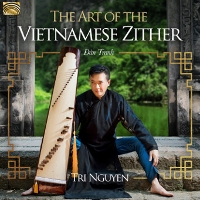
Tri Nguyen
Defend The Rhino
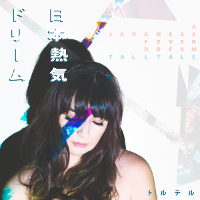
Talltale
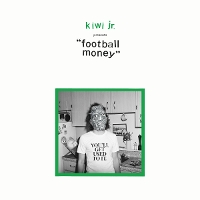
Kiwi Jr.
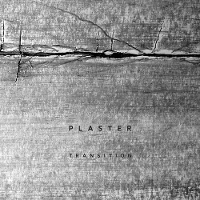
Plaster

Hyness
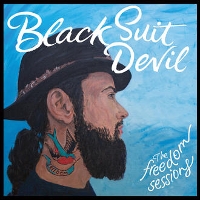
Black Suit Devil
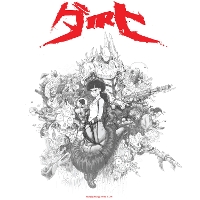
Yamantaka // Sonic Titan
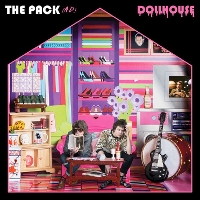
The Pack A.D.
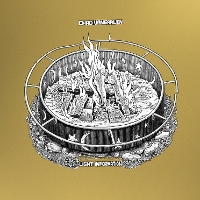
Chad VanGaalen
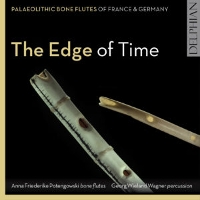
Potengowski Anna Friederike
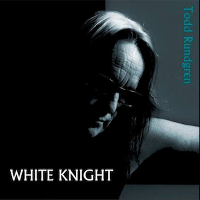
Todd Rundgren
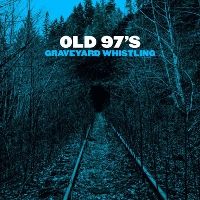
Old 97's
Needles//Pins
This Month
!earshot Top 200 of 2021For January to December 2021
|
|||
| TW | Artist - Title - (Label) | ||
|---|---|---|---|
| 1 | TEKE::TEKE 
Shirushi - (Kill Rock Stars) |
||
| 2 | The Halluci Nation
One More Saturday Night - (Radicalized) |
||
| 3 | Chad VanGaalen
World's Most Stressed Out Gardener - (Flemish Eye) |
||
| 4 | The Weather Station
Ignorance - (Next Door) |
||
| 5 | Kiwi Jr.
Cooler Returns - (Kiwi Club) |
||
| 6 | Arlo Parks
Collapsed In Sunbeams - (Transgressive) |
||
| 7 | Ada Lea
one hand on the steering wheel the other sewing a garden - (Next Door) |
||
| 8 | Sook-Yin Lee & Adam Litovitz
jooj two - (Mint) |
||
| 9 | Suuns
The Witness - (Secret City) |
||
| 10 | Andy Shauf
Wilds - (Arts & Crafts) |
||
|
View the full !earshot Top 200 |
|||
| Specialty Charts #1s | |||
| Electronic: | The Halluci Nation - One More Saturday Night - (Radicalized) | ||
| Hip Hop: | Cadence Weapon - Parallel World - (Self-Released) | ||
| International: | Lakou Mizik and Joseph Ray - Leave The Bones - (Anjunadeep) | ||
| Jazz: | Adrian Younge - The American Negro - (Jazz Is Dead) | ||
| Loud: | Tunic - Exhaling - (Artoffact) | ||
| Folk/Roots/Blues: | Allison Russell - Outside Child - (Fantasy) | ||


