
Composer, Pianist, IconoclastThe Iconoclast Trio is only the latest project for composer and jazz veteran George McFetridgeBy Jim Dupuis 1 of 2 Next>
JD: Could you tell us who’s involved in the Iconoclast Trio? You mentioned some names already, and how long you have known each other? GM: It’s been this past year, that James McRae, the drummer and composer and Sean Drabbi, the bassist and myself hooked up for a few gigs, and we really liked what we were doing and decided to make a formal group out of it. So it’s been fairly recent. I had played with James about ten years ago in the Victoria area and we had kept a connection over the years, so it’s sort of a resurfacing of that old connection. JD: So you are touring to support a new CD called Hinterland. Could you tell us a bit about the CD? GM: It’s made up of mostly originals. James does a lot of composing and so do I. We have several of each of our pieces on it, plus a couple of standards. It’s self produced. We recorded it in Victoria this summer and we’ve been sending it all over the place and getting a good response. JD: That’s good to hear. I think my listeners are going to be happy to hear the cuts I’ll be playing tonight for them off Hinterland. GM: That’s great. JD: Now when you’re composing, you mentioned that you and James (McRae) do the composing, what part does improvisation play in the composing process? GM: It’s a built-in factor. We’ll have written material that also includes spaces where there can be lots of improvisation. So I would say the main emphasis is on improvising in the group. We’re trying for unusual combination of elements to try and create kind of a fresh sound. I think (laughs). JD: Hopefully, that works. Well, George, the Vancouver International Jazz Festival program says that you have a unique harmonic approach. What do you think they mean by that? GM: Yes, my particular efforts involve a different scale system, differing from the major/minor scales JD: Hey, they say that James Brown is the hardest working man in show biz, but they have you listed with a band called ANATMA, East Wind, Mike Allen’s Quartet, your own trio with the October Trio guys and the Iconoclast Trio. When do you have time to do anything else? GM: (laughing) Well you know what fuels all those projects is my composing. I’m in a great position of being able to write music for all those groups. It’s very good for me to have a lot of different avenues, because I write so much and it enables me to get the stuff played. I also write for the East Wind Quintet, which is a long established group in the Vancouver area. So, again, those things come out of the writing that I do. You know, you write this music and you have to figure out a way to get if played (laughs) and the best thing is to have a group to write for. JD: Ya, I guess that works. I interviewed Josh Cole of the October Trio last year and you have played with him. What’s it like playing music with these young guys? GM: It’s terrific. That infusion of energy is just fantastic. I really enjoy being around people that I could be the “Dad” of (laughs). There’s a whole scene there—an emerging scene—that’s very exciting to be a part of. I’m getting a lot of ideas, as to, places to play that these young guys know about, that I hadn’t thought about. It’s opening up new vistas, not to mention the musical stimulation. Ya, it’s great. I’ll also mention Dan Gauthier, too, a very fine young drummer, who is also in the ANATMA group. Ya, it’s been very stimulating. As you know, these guys are making there way. JD: They are going to be a force to reckon with. Young Evan Artzen, who you also know… GM: He’s a great player. JD: What do you like listening to and who has influenced you over the years? GM: Wow, that’s a huge question. I find that like most musicians I listen to everything—everything that’s around. I find that more and more in terms of direct influences I can’t seem to get past people like Bud Powell. Even though there is not a direct stylistic influence, it’s the approach and the general influential character of players like that. I go way back in my listening actually. I like players like Earl Hines, Bud Powell and I listen to all the younger people, too. JD: What’s in the CD player this week? Do you listen to anything that isn’t jazz? GM: I listen to everything. The contact with younger musicians has been wonderful. It has opened me up to a lot of alternative music that isn’t swing based. So there’s all kinds of influx there. People like Bjork or Tortoise—all kinds of groups I find very stimulating. Radiohead—groups like that. I find a lot of that is really where music is going, so I play quite close attention to these groups that aren’t swing based music. So I wouldn’t limit myself at all (laughs). JD: It’s a good idea to not limit yourself. I hear you playing with the young guys from the October Trio and guys like Mike Allen—the age difference is large—it’s kind of neat that you can get into playing in the clubs with the young people. Vancouver has always had a vibrant scene, with clubs coming and going, like the Sugar Refinery. GM: Ya, it closed down. JD: I guess the old standbys are still happening with The Cellar and O’Doul’s. GM: Ya, but with our trio we are going to lots of unusual places. We’ve played in Malcolm Island, way up north of Vancouver Island in a town called Sointula. We played a nice little concert up there. We have played in Duncan and places in Nanaimo and places in Victoria. It’s quite interesting to take the music away from the cities—the big urban areas. There’s another level of appreciation that you get. 1 of 2 Next> |
Reviews
Mngwa
Andrew Franey
The Shangs
Alex Cuba
Tri Nguyen
Defend The Rhino

Talltale
Kiwi Jr.
Plaster

Hyness
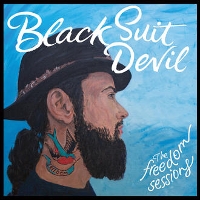
Black Suit Devil
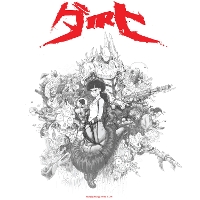
Yamantaka // Sonic Titan
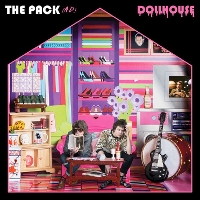
The Pack A.D.
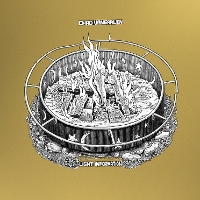
Chad VanGaalen
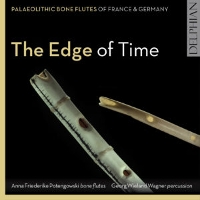
Potengowski Anna Friederike
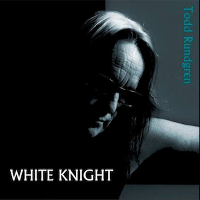
Todd Rundgren
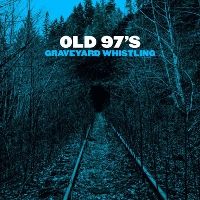
Old 97's
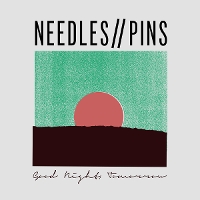
Needles//Pins
This Month
!earshot Top 200 of 2021For January to December 2021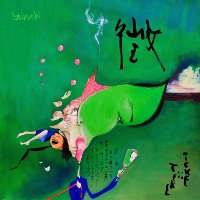
|
|||
| TW | Artist - Title - (Label) | ||
|---|---|---|---|
| 1 | TEKE::TEKE 
Shirushi - (Kill Rock Stars) |
||
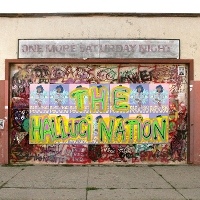
| 2 | The Halluci Nation
One More Saturday Night - (Radicalized) |
||
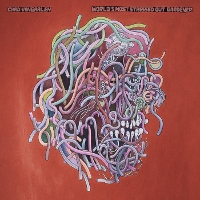
| 3 | Chad VanGaalen
World's Most Stressed Out Gardener - (Flemish Eye) |
||
| 4 | The Weather Station
Ignorance - (Next Door) |
||
| 5 | Kiwi Jr.
Cooler Returns - (Kiwi Club) |
||
| 6 | Arlo Parks
Collapsed In Sunbeams - (Transgressive) |
||
| 7 | Ada Lea
one hand on the steering wheel the other sewing a garden - (Next Door) |
||
| 8 | Sook-Yin Lee & Adam Litovitz
jooj two - (Mint) |
||
| 9 | Suuns
The Witness - (Secret City) |
||
| 10 | Andy Shauf
Wilds - (Arts & Crafts) |
||
|
View the full !earshot Top 200 |
|||
| Specialty Charts #1s | |||
| Electronic: | The Halluci Nation - One More Saturday Night - (Radicalized) | ||
| Hip Hop: | Cadence Weapon - Parallel World - (Self-Released) | ||
| International: | Lakou Mizik and Joseph Ray - Leave The Bones - (Anjunadeep) | ||
| Jazz: | Adrian Younge - The American Negro - (Jazz Is Dead) | ||
| Loud: | Tunic - Exhaling - (Artoffact) | ||
| Folk/Roots/Blues: | Allison Russell - Outside Child - (Fantasy) | ||

 What fuels all those projects is my composing. You write this music and you have to figure out a way to get if played and the best thing is to have a group to write for.


