
Senator Tommy Banks InterviewBy Jim Dupuis 2 of 2 <Back JD: That's a politically correct answer from a Senator (laughs). TB: (laughs) It's also true. JD: I usually ask musicians who their influences are�but seeing that other musicians list you as their influence�I'm going to ask you if you have any heroes? TB: (laughs) Oh, I have lots of heroes. I think all musicians regardless of what they are doing; whether they are classical composers or jazz piano players are influenced by somebody. I mean, we are all influenced by everything that went on before; but, I do have heroes. Oscar Peterson is a hero. He should be a hero to every Canadian, because anytime we have a Canadian who does something better than anybody else does in the word�they should be our heroes, and Oscar Peterson is one of mine. One of his heroes was Art Tatum, so that makes Art Tatum one of mine, too. So those are my two favourite jazz piano players, although there's a very long list�Teddie Wilson was unassailably good and on up to the newer players. There are some new guys coming up that are just astounding and of course there's Bill Evans, who you know, invented everything, practically. JD: Yes, that's true. So, when you are home and listening to music, what are you listening to? TB: Everything. I have a lot of symphonic music. I don't listen to a whole lot of chamber music, but I have some and I have a lot of jazz, both big band and small group. I love listening to good cabaret singers and working with good cabaret singers. I did that a lot in my music time and I enjoyed it very much. JD: Folks like Anita O�Day for example. TB: Yes, I accompanied her on a television show and a concert and some festivals. JD: Speaking of television shows, for my generation the first exposure to jazz for many of us was The Tommy Banks Show, which I remember fondly. How long did it run, altogether/ TB: I'm glad you remembered that fondly. Thank you. I think the first year it ran was either 1967 or 68 and the last year was 1983. JD: It lived in syndication for a long time, too. Didn't it? TB: Yes, it was for quite a while (laughs). If you go to Zimbabwe you can probably still see it (laughs, more). Once these shows get out of the box you can see them in syndication forever. JD: Well, you've served your community a lot. You were the Chair of the Alberta Arts Foundation which established The Tommy Banks Award for school band directors and your were Chair of the music program at Grant MacEwan College . I happen to know that you adjudicated students at performing arts festivals and you were a member of the Canada Council. This being said, could you speak to the importance of arts education in our schools. TB: Oh yes. I don't understand, and I have been arguing this for 50 years, I guess, why curriculum development folks and school boards and trustees and the like do not understand, because the evidence for it is irrefutable because the importance of arts education and particularly music education, may I say, as a core subject in the schools�there is simply no longer any doubt and the evidence is incontrovertible that the study of music makes better students in all of the other academic subjects. It also makes better people because there is no better way to teach people the importance of interdependence than by playing in a band in which everyone is relying on you to do your job and ou are relying on everyone else to do their jobs and you can't let down or everybody knows it and it hurts the group effort. It's a very important thing to learn in life and there is no better way to learn it than in a band or orchestra or choir. JD: That's well said. And speaking of choirs, you are preaching to the choir here, and I couldn't agree with you more. Now, you produced much of PJ Perry's music and you produced and played on Kennedy Jenson's CD. Do you have anything coming out soon? TB: I do. In the fall we'll be releasing a Christmas album of Alberta artists we have recorded over the years and I'm very proud of that. A little later, maybe in the spring, we'll be releasing an album�I keep saying albums�but they are CDs of course�if I'd guess you'd call it middle of the road music of various kinds that we recorded, because of course we weren't playing jazz all the time and we weren't doing symphony pop stuff all the time. We were recording lots of different kinds of music. I don't know what you'd call it these days�middle of the road�easy listening�accessible? It's the music that my Mom and Dad would like. We're going to be releasing an album of that, too. JD: That's a good idea. I look forward to hearing it. TB: Thank you. JD: I've got a list of the awards and prizes that you have won. I don't have enough time to list them all but, you won the Haultain Prize, the Juno and the Gemini. You were made an Officer of the Order of Canada ; received the Alberta Order of Excellence and you have been appointed to the Senate. They even named a street after you. I won't ask you what your favourite is� TB: (laughs) JD: � because that is something you couldn't answer. TB: The streets pretty nice, although I have to go fix the potholes when they get too deep. JD: Isn't that a federal responsibility? TB: (laughs) They are all very and nice and I'm very pleased by all of them. JD: All well deserved. Your work in the arts and education communities are appreciated by many Canadians and not just Albertans. TB: And speaking of awards, we are going to be handing out one on the 27 th of July at the concert; The George Ryga Award. JD: Yes, the 2 nd Annual George Ryga Award for Social Awareness in Literature. TB: It's a very important award. JD: Yes it is. Ken Smedley and the people at the Ryga Centre do a good thing in honouring social awareness and it is appreciated by many of us. (Note: Books nominated are The Greenpeace To Amchitka: an environmental odyssey, written by journalist Robert Hunter. It is a highly personal chronicle of the famous Greenpeace attempt to stop underground nuclear testing in 1971. Redress , written by Canadian poet and academic Roy Miki, is another very carefully researched chronicle of attempts made by Japanese Canadians to have the Federal Government apologize to the Japanese Canadian community for its treatment of them during the 2nd Word War. A Stain Upon The Sea, written by a team of national journalists---Stephen Hume, Alexandra Morton, Betty C. Keller, Rosella M. Leslie, Otto Langer and Don Staniford is a painstaking investigation of the rise of salmon farming on the West Coast . As of submission time the winner had not been announced) . TB: Yes. JD: Thank you very much Senator Banks. I know that you are very busy and you have legislation happening. You shouldn't be working in the summertime, but I guess you have to these days. TB: Well we work until the work is done. JD: Thanks for talking with us. TB: And thank you. I look forward to seeing you on the 27 th. 2 of 2 <Back |
Reviews
Mngwa
Andrew Franey
The Shangs
Alex Cuba
Tri Nguyen
Defend The Rhino

Talltale
Kiwi Jr.
Plaster

Hyness
Black Suit Devil
Yamantaka // Sonic Titan
The Pack A.D.
Chad VanGaalen
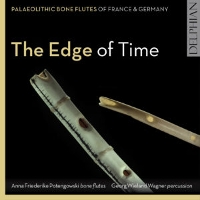
Potengowski Anna Friederike
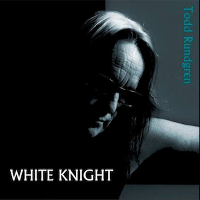
Todd Rundgren
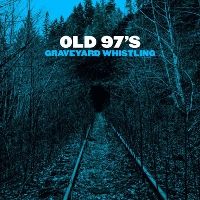
Old 97's
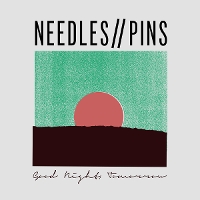
Needles//Pins
This Month
!earshot Top 200 of 2021For January to December 2021
|
|||
| TW | Artist - Title - (Label) | ||
|---|---|---|---|
| 1 | TEKE::TEKE 
Shirushi - (Kill Rock Stars) |
||
| 2 | The Halluci Nation
One More Saturday Night - (Radicalized) |
||
| 3 | Chad VanGaalen
World's Most Stressed Out Gardener - (Flemish Eye) |
||
| 4 | The Weather Station
Ignorance - (Next Door) |
||
| 5 | Kiwi Jr.
Cooler Returns - (Kiwi Club) |
||
| 6 | Arlo Parks
Collapsed In Sunbeams - (Transgressive) |
||
| 7 | Ada Lea
one hand on the steering wheel the other sewing a garden - (Next Door) |
||
| 8 | Sook-Yin Lee & Adam Litovitz
jooj two - (Mint) |
||
| 9 | Suuns
The Witness - (Secret City) |
||
| 10 | Andy Shauf
Wilds - (Arts & Crafts) |
||
|
View the full !earshot Top 200 |
|||
| Specialty Charts #1s | |||
| Electronic: | The Halluci Nation - One More Saturday Night - (Radicalized) | ||
| Hip Hop: | Cadence Weapon - Parallel World - (Self-Released) | ||
| International: | Lakou Mizik and Joseph Ray - Leave The Bones - (Anjunadeep) | ||
| Jazz: | Adrian Younge - The American Negro - (Jazz Is Dead) | ||
| Loud: | Tunic - Exhaling - (Artoffact) | ||
| Folk/Roots/Blues: | Allison Russell - Outside Child - (Fantasy) | ||


