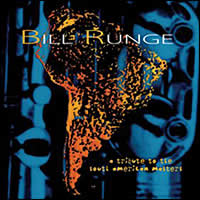
Jazz, of course, but hip hop, blues and pop, too.Vancouvers Bill Runge doesn't genres and categories limit is playingJim Dupuis 2 of 2 <Back JD: Twelve Easy Pieces, that’s an interesting CD. BR: I like it a lot and you’d find that and probably a couple of Michael Brecker records. It’s hard to say what else, but generally some form of jazz or orchestral music. JD: Bill, for this new CD that you have out it’s called A Tribute to The South American Masters, could you tell us about it. BR: It didn’t start out the way that it ended up. I hadn’t really thought about the theme of the South American music, but as I started compiling the material there was a thread of being influenced by South American music—these pieces that I’d written. Then I thought, why don’t I dedicate each one to one of my favourite composers, so each on is emulating and if not JD: What I like about it, is that one forgets how many different types of South American music exist and you are reminding us, with this CD, that there is the bossa nova and samba. I forgot about the tango and you’ve kind of woke us up a little bit about these forms. I was going to ask you about the accordion and you alluded to that already. When did the accordion become so cool? It’s appearing on many CDs now. BR: It is. It’s an interesting sound. It’s not a piano and it’s not anything else and it’s a great texture to add to something. Of course, I used it because of the Argentinian tradition of the bandeneon, which is like a button accordion. It doesn’t have any keys. It looks like a big Scrabble game. I don’t know how exactly they play it, but there is a tradition in that country of the bandaneon, like Daniel Benelli as well. But you are right. I hear it on a lot more things. It’s resurging a bit. JD: There’s a wealth of fantastic players of this CD. A couple that I noticed are the boys out of Whitehorse, I think, Steve Dawson and Jesse Zubot. How did you run into them? BR: Let me think. I’m not sure where I ran into them, but I have played with Jim Byrnes in his acoustic band, which includes those two, on occasion when their regular bassist wasn’t there, so I’ve known them from there. I think I’ve just met them here and there. I’ve seen them perform and they are remarkable musicians and they have a real magical quality about them, you know, it’s mystical almost, both together and alone. They don’t actually play together on the CD. They are featured on different tunes. They are amazing. JD: You’ve played with a wide variety of acts. According to your bio, you’ve played with Swollen Members, K-OS, Buddy Miles, Willie Dixon, to name a few. Is that all true? BR: Yes it is. They weren’t all gigs. I mean, I was on stage with Willie Dixon at the Montreux Jazz Festival. It was a blues night at the jazz festival and Powder Blues was there. They had us all come out and do some tunes together. I think our horn section came out and then a horn section from another band so some of these guys got some of these guys got up and did songs. It was amazing. So that’s the example, there. Swollen Members—I did some tracks for there last CD. I don’t think it’s out yet. K-OS, I played on a session for him—not his last CD, but the one before. I think it was before he got big and he was really nice. INXS was also a recording session. That was a number of years ago. Often big acts would come to town because of the great recording studios and the great talent, here. They would bring their bands to town and camp out for months and often we would get horn section work with them, because the producer would be someone like Bruce Fairburn, for instance and he knows all us horn players and he would just hire us to come in and play parts on some of the tunes, so that’s how it worked out. I wasn’t in those bands really. JD: Well, it’s still pretty cool, the number of different bands that you have played with, even for a short time—well it had to be a lot of fun. It still boggles my mind that you can switch from rock to blues, to jazz to just about rap—that’s a true musician and all your own stuff, too. BR: Well, thanks. I’ve been a musician for almost 35 years and part of it is (laughs) I’ve had time to explore all these different things. It takes time. JD: And it also shows that you’re making a living, what the hell. BR: Let’s not forget that and if you’ve got a job for me, I’m going to do it if I possibly think I can do it and so far I think I’ve been able to do that. JD: Indeed you have. Speaking of another of the projects you’ve been involved with. I’ve managed to see VEJI, the Vancouver Ensemble of Jazz Improvisation, a number of times. I believe you are one of the charter members. Could you tell us a bit about that band? BR: Oh, ya, that was one of the first ensembles I was involved in. It started around 1980 and I have been in and out of the band over the years. It has had quite a number of personnel. I was in near the beginning and I am still currently playing with the band. Of course, it’s the brainchild of Hugh Fraser, the great Victoria, pianist, trombonist, composer and arranger. I’ve been on half of their recordings and have been a current member lately. Hugh’s a true inspiration. He always gets the best musicians in Canada, so I always look forward to it because I get a chance to do some listening to some heavy players. JD: Ya, that’s always the case with that band. I had the pleasure of seeing them at Expo 86 (in Vancouver) at a large hall. Everybody had fun and Bill Clark was dancing in the aisles. Did you play in that show? BR: The Discovery Theatre. Yes, I think I did. JD: That was wild. That was one of the most fun times I had at Expo and I had a lot of fun at Expo JD: So Bill, what do you have planned for the summer? Playing at any festivals?
JD: Thanks a lot for talking to us. Good luck at the jazz festival. You say you’re not doing much, but that’s more than I’d want to do. It sounds like a job to me. BR: (laughs) There is still lots of white in the calendar pages. JD: Ya, but in your case they get filled up pretty quick. BR: (laughs) Let’s hope. Bill Runge’s CD A Tribute to The South American Masters is distributed by Maximum Jazz and may be available at most record stores or check out the Maximum website at http://www.maxmusic.ca/catalogue.php. 2 of 2 <Back |
Reviews
Mngwa
Andrew Franey
The Shangs
Alex Cuba
Tri Nguyen
Defend The Rhino

Talltale
Kiwi Jr.
Plaster

Hyness
Black Suit Devil
Yamantaka // Sonic Titan
The Pack A.D.
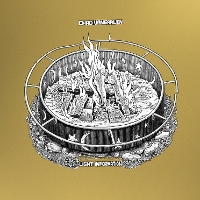
Chad VanGaalen
Potengowski Anna Friederike
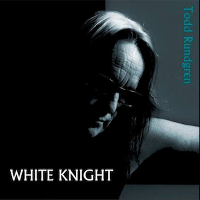
Todd Rundgren
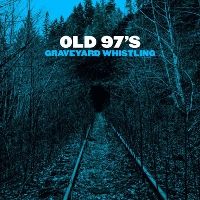
Old 97's
Needles//Pins
This Month
!earshot Top 200 of 2021For January to December 2021
|
|||
| TW | Artist - Title - (Label) | ||
|---|---|---|---|
| 1 | TEKE::TEKE 
Shirushi - (Kill Rock Stars) |
||
| 2 | The Halluci Nation
One More Saturday Night - (Radicalized) |
||
| 3 | Chad VanGaalen
World's Most Stressed Out Gardener - (Flemish Eye) |
||
| 4 | The Weather Station
Ignorance - (Next Door) |
||
| 5 | Kiwi Jr.
Cooler Returns - (Kiwi Club) |
||
| 6 | Arlo Parks
Collapsed In Sunbeams - (Transgressive) |
||
| 7 | Ada Lea
one hand on the steering wheel the other sewing a garden - (Next Door) |
||
| 8 | Sook-Yin Lee & Adam Litovitz
jooj two - (Mint) |
||
| 9 | Suuns
The Witness - (Secret City) |
||
| 10 | Andy Shauf
Wilds - (Arts & Crafts) |
||
|
View the full !earshot Top 200 |
|||
| Specialty Charts #1s | |||
| Electronic: | The Halluci Nation - One More Saturday Night - (Radicalized) | ||
| Hip Hop: | Cadence Weapon - Parallel World - (Self-Released) | ||
| International: | Lakou Mizik and Joseph Ray - Leave The Bones - (Anjunadeep) | ||
| Jazz: | Adrian Younge - The American Negro - (Jazz Is Dead) | ||
| Loud: | Tunic - Exhaling - (Artoffact) | ||
| Folk/Roots/Blues: | Allison Russell - Outside Child - (Fantasy) | ||
 Most of what I'm doing is based on one kind of Afro-American forms or another; you know the jazz, blues, R&B and even rock if you want to put that under the same umbrella. I just like it all, so I guess it feels natural to do all the different things. Maybe I'm saying that a lot of them aren't that different in my mind.