
Composer, Pianist, IconoclastThe Iconoclast Trio is only the latest project for composer and jazz veteran George McFetridgeBy Jim Dupuis 2 of 2 <Back JD: There certainly is. You take it to places that are starved for jazz, for example, around here, we don’t get many jazz shows, and it’s wonderful when a jazz band comes through. We just had the Marc Atkinson Trio (see last month’s interview with Marc) come through and the hall was packed, they got a standing ovation and there was a long line-up to get CDs. It was a midday show from 12:30 to 1:30—most musicians aren’t even up that early (laughs) GM: Great, that’s really encouraging to hear. JD: This is going to be a tough one and I know I couldn’t honestly answer this one. What is your earliest musical memory? GM: Wow, that’s a great one. Probably I’d have to go back to early childhood for that one. I always like to talk about the time I was listening to the radio when I was about fourteen. There were two things that I heard that really snapped me around and made me and made me want to be a part of the music world. It was formative for me. I heard the Thelonious Monk Quartet on the radio at Live at the Five Spot recorded in the late 1950s. That was a signal event for me, like an epiphany. I thought, “What a wonderful, beautiful world that is and I want to be part of that.” The other tracks I heard were by Tadd Dameron’s group. I thought that was the craziest piano playing that I’d ever heard in my life and I loved it and wanted to be a part of it. I’ll always remember hearing those two discs on the radio when I was about fourteen. Those two discs set me on my course. JD: I’m guessing it was on CBC. GM: No, it was on CKUA. You see, I grew up in Edmonton, Alberta. So it was CKUA, which was really responsible for my formations of what I thought of as music, which sort of set me on my course. I listened to a lot of that radio station. I’m a CKUA guy. I remember them in the early 60s and they kind of turned my crank. JD: I know that you went to the Berklee School of Music (http://www.berklee.edu/). I see it in a lot of musician’s bios. What is the Berklee School of Music? I’m finally talking to someone that would know. GM: Well, I did four years there in composition and arranging, so I got a degree. It was wide ranging. That’s the main thing I would say about it. The school covered all different aspects JD: What years were you there? GM: I was there long ago. It was 68-72, ya. After that I went on to the Buddy Rich Band (laughs) as a postsecondary thing. JD: Ya, that would be postsecondary, no doubt about that. Speaking about Buddy—to my detriment I make Buddy Rich jokes. It seems that over the years it has come out that Buddy wasn’t that nice. Is it actually true. GM: (laughing) Everything you hear about him is true. Have you seen the comic books? JD: No. GM: Someone actually made one up about life on the road. I used to have it. This is quite well known—all these tapes circulated about him firing the band. Well, he was a temperamental guy—he was a nervous guy, but a good band though. JD: (laughing) It was an education, though. GM: It was an education. You had to really be on your toes. I enjoyed the band and I made some good connections in the band. There were some good soloists and very good music, you know—a good book. It was well worth it. If you just stayed out of his way you were fine (laughs). JD: So if you avoided Buddy it was cool. GM: Ya. JD: There’s sort of a standing Buddy Rich joke. It goes like this. A musician who used to play with Buddy comes GM: (laughs) JD: Ok, then, if you ever get time, what do you like doing that doesn’t involve music? GM: After Bush invaded Iraq, I became a peace activist. I’m involved in a couple of groups in the Vancouver area and we’ve done quite a bit of work to just sort of raise consciousness about the state of affairs, right now. So, that’s a new development with me, totally separate from music. That’s some work that I really feel is required now. So, that’s another facet. JD: How can our folks get a copy of the new record; Hinterland. GM: Well, we have a website, which we would be glad to hear from people on. It’s theiconoclast.ca. That’s a very good way to get a hold of us. There’s all kinds of contact information and we can certainly send stuff off in the mail as needed. We don’t have formal distribution as such, but we can look after that for any interested people and the best thing, again, is to go to the web site. We will bring some with us to sell off the bandstand at our shows, too. JD: Ok, then, if you ever get time, what do you like doing that doesn’t involve music? GM: After Bush invaded Iraq, I became a peace activist. I’m involved in a couple of groups in the Vancouver area and we’ve done quite a bit of work to just sort of raise consciousness about the state of affairs, right now. So, that’s a new development with me, totally separate from music. That’s some work that I really feel is required now. So, that’s another facet. 2 of 2 <Back |
Reviews
Mngwa
Andrew Franey
The Shangs
Alex Cuba
Tri Nguyen
Defend The Rhino

Talltale
Kiwi Jr.
Plaster

Hyness
Black Suit Devil
Yamantaka // Sonic Titan
The Pack A.D.
Chad VanGaalen
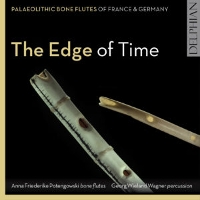
Potengowski Anna Friederike
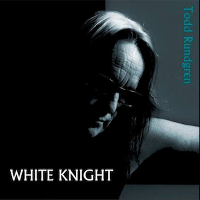
Todd Rundgren
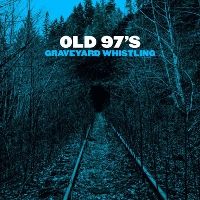
Old 97's
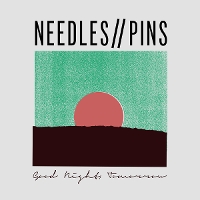
Needles//Pins
This Month
!earshot Top 200 of 2021For January to December 2021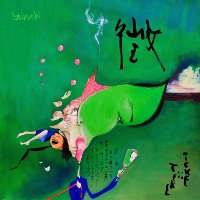
|
|||
| TW | Artist - Title - (Label) | ||
|---|---|---|---|
| 1 | TEKE::TEKE 
Shirushi - (Kill Rock Stars) |
||
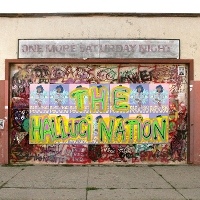
| 2 | The Halluci Nation
One More Saturday Night - (Radicalized) |
||
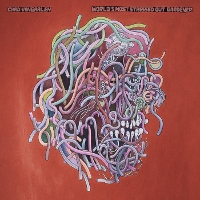
| 3 | Chad VanGaalen
World's Most Stressed Out Gardener - (Flemish Eye) |
||
| 4 | The Weather Station
Ignorance - (Next Door) |
||
| 5 | Kiwi Jr.
Cooler Returns - (Kiwi Club) |
||
| 6 | Arlo Parks
Collapsed In Sunbeams - (Transgressive) |
||
| 7 | Ada Lea
one hand on the steering wheel the other sewing a garden - (Next Door) |
||
| 8 | Sook-Yin Lee & Adam Litovitz
jooj two - (Mint) |
||
| 9 | Suuns
The Witness - (Secret City) |
||
| 10 | Andy Shauf
Wilds - (Arts & Crafts) |
||
|
View the full !earshot Top 200 |
|||
| Specialty Charts #1s | |||
| Electronic: | The Halluci Nation - One More Saturday Night - (Radicalized) | ||
| Hip Hop: | Cadence Weapon - Parallel World - (Self-Released) | ||
| International: | Lakou Mizik and Joseph Ray - Leave The Bones - (Anjunadeep) | ||
| Jazz: | Adrian Younge - The American Negro - (Jazz Is Dead) | ||
| Loud: | Tunic - Exhaling - (Artoffact) | ||
| Folk/Roots/Blues: | Allison Russell - Outside Child - (Fantasy) | ||
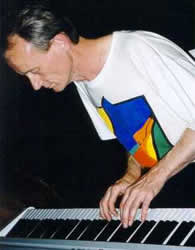
 I heard the Thelonious Monk Quartet on the radio at Live at the Five Spot recorded in the late 1950s. That was a signal event for me, like an epiphany


